
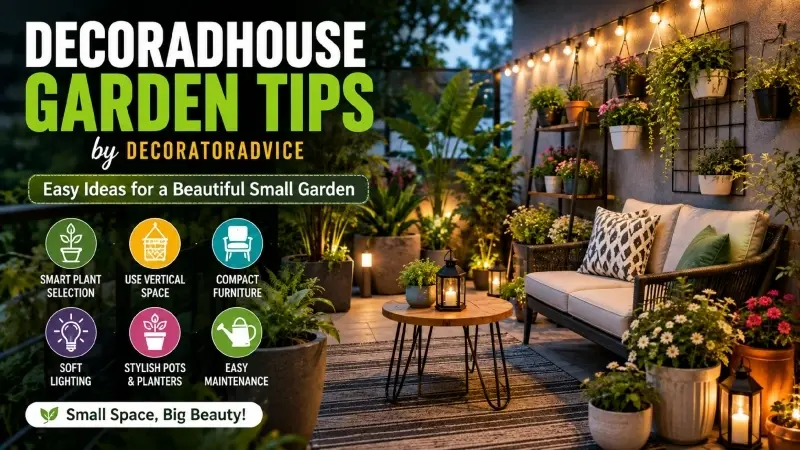
A small garden can become one of the most attractive areas of a home with the right design. You do not need a huge backyard to create a beautiful outdoor space. A balcony, patio, terrace, or compact backyard can look fresh and inviting with smart planning.
The best garden designs combine beauty with practicality. Plants add natural color, while suitable furniture creates comfort. Soft lighting can transform the space after sunset. Meanwhile, carefully selected pots and simple decorations can give the garden a polished appearance.
These decoradhouse garden tips by decoratoradvice focus on practical ways to make a small outdoor area feel more comfortable, organized, and stylish. Whether you prefer a modern garden or a natural green corner, small improvements can create a noticeable difference.
Why Small Garden Design Matters
A small garden has limited space, so every choice matters. Adding too many plants or large furniture can quickly make the area feel crowded.
Good planning creates balance between greenery, seating, decoration, and open space.
A well-designed garden can provide several benefits:
- Creates a relaxing outdoor retreat
- Adds natural beauty to your home
- Makes unused space more useful
- Provides an area for morning tea or coffee
- Improves the appearance of balconies and patios
- Gives you space for small plants or herbs
- Creates a comfortable place for reading and relaxing
The goal is not to fill every available corner. Instead, use each part of the garden with a clear purpose.
Start With a Simple Garden Plan
Before buying plants or outdoor decorations, examine the available space.
Measure the area and identify its strongest features. Then consider how sunlight moves through the space during the day.
Check the following points:
- Available floor space
- Direct sunlight
- Shaded areas
- Existing walls and railings
- Drainage
- Available water supply
- Seating requirements
- Storage needs
- Walking space
Create a basic layout before purchasing anything. This simple step can prevent unnecessary spending and help you avoid overcrowding.
For example, you could reserve one corner for plants and another for seating. Empty wall space can then support vertical planters.
Choose Plants According to Your Space
Plants are the foundation of an attractive garden. However, the best plant is not always the most beautiful one.
You should choose plants according to sunlight, temperature, available space, watering needs, and maintenance time.
For a small garden, consider combining different plant heights and textures.
You can use:
- Flowering plants for color
- Green foliage plants for freshness
- Herbs for practical use
- Trailing plants for hanging containers
- Compact shrubs for structure
- Succulents for low-water areas
This combination creates visual variety without requiring a large garden.
Select Plants for Sun and Shade
Sunlight should influence your plant choices.
Sunny areas can support many flowering plants and herbs. Shaded corners require plants that tolerate lower light conditions.
Depending on local conditions, suitable options may include lavender, marigolds, basil, mint, jasmine, pothos, ferns, peace lilies, or snake plants.
However, always check the specific growing requirements of each plant before purchasing it.
Use Vertical Gardening to Save Space
Vertical gardening is one of the smartest solutions for a small outdoor area.
Instead of using every available square foot of floor space, use walls, railings, shelves, and hanging structures.
You can create vertical greenery with:
- Wall-mounted planters
- Hanging pots
- Plant shelves
- Tiered stands
- Trellises
- Vertical garden panels
- Hanging baskets
Trailing plants can also soften hard walls and create a natural appearance.
The biggest advantage is that vertical gardening adds greenery without sacrificing valuable floor space.
Create a Comfortable Seating Corner
A garden becomes more useful when you have somewhere comfortable to sit.
However, small gardens require compact furniture.
Instead of placing a large outdoor sofa in a limited area, consider:
- Folding chairs
- A narrow bench
- Compact outdoor stools
- A small bistro table
- Foldable tables
- Slim outdoor seating
Choose weather-resistant materials where possible. Wood, metal, rattan, and suitable outdoor plastics can work well depending on your climate.
Add one or two cushions for comfort without filling the entire seating area with accessories.
A simple chair beside a few plants can create an ideal spot for morning coffee, reading, or quiet evening relaxation.
Add Soft Outdoor Lighting
Good lighting can completely change the atmosphere of a garden after sunset.
During the day, plants provide natural beauty. At night, carefully positioned lights create warmth and depth.
Consider using:
- Solar garden lights
- String or fairy lights
- Small lanterns
- Wall lights
- Pathway lighting
- Decorative LED lights
Avoid making every corner extremely bright. Soft, warm lighting usually creates a more relaxing atmosphere.
You can also highlight a special plant, wall, or seating area with a small accent light.
Choose Stylish Pots and Planters
Planters are both functional and decorative.
The right pots can make an ordinary plant arrangement look much more organized.
For a modern garden, consider neutral shades such as:
- White
- Black
- Grey
- Beige
- Brown
Ceramic containers can create a clean appearance. Wooden planters can add warmth, while cement-style containers can provide a modern architectural feel.
The most important point is consistency. Too many unrelated colors and designs can make a small garden look visually busy.
Arrange Plants at Different Heights
Plant height creates depth.
Place taller plants toward the back and smaller plants toward the front. Hanging plants can add another visual level.
A simple arrangement might include:
Tall plants → Medium plants → Small plants → Ground-level decoration
You can also use plant stands to raise smaller pots.
This technique makes a compact garden feel more layered without requiring more floor space.
Decoradhouse Garden Tips by DecoratorAdvice for Low-Maintenance Gardens
A beautiful garden should not become a daily burden.
If you have limited time, select plants and decorations that are easy to maintain.
Simple maintenance strategies include:
- Choose plants suited to your local climate
- Use containers with proper drainage
- Remove dead leaves regularly
- Trim overgrown plants
- Clean outdoor furniture
- Check plants for pests
- Keep pathways clear
- Avoid unnecessary decorations
Low-maintenance gardening is particularly useful for people with busy schedules.
The goal should be a garden that stays attractive without requiring constant attention.
Water Plants the Right Way
Watering seems simple, but incorrect watering can damage plants.
Before watering, check the soil rather than following a fixed schedule.
Some plants need consistently moist soil, while others prefer the soil to dry slightly between watering.
Remember these basic practices:
- Check soil moisture first
- Avoid unnecessary daily watering
- Use drainage holes
- Do not allow water to remain stagnant
- Water according to each plant’s needs
- Reduce watering when conditions require it
Overwatering can be just as harmful as underwatering.
Use a Simple Garden Color Scheme
Color can strongly affect how a small garden feels.
Too many colors may make the space appear chaotic. A limited palette creates a cleaner appearance.
You could use a combination of:
- Green plants
- White planters
- Natural wood
- Neutral furniture
- One accent color
Flowers can provide seasonal color without requiring colorful furniture and decorations everywhere.
A consistent palette also makes the garden feel more connected to the rest of your home.
Add Natural Materials
Natural materials can make an outdoor space feel warmer and more relaxing.
Consider adding:
- Wooden planters
- Stone decorations
- Bamboo screens
- Natural-fiber outdoor accessories
- Wooden furniture
- Decorative pebbles
These materials can work particularly well with green plants.
However, avoid adding too many materials at once. Two or three complementary textures can create enough visual interest.
Create a Small Herb Garden
A small garden does not have to be purely decorative.
You can grow useful herbs in containers.
Depending on your local climate and growing conditions, options may include:
- Mint
- Basil
- Rosemary
- Thyme
- Parsley
- Chives
A small herb garden can make your outdoor space more practical.
Place herbs somewhere that provides their required light and allows easy access for watering and harvesting.
Add Privacy Without Making the Space Feel Smaller
Balconies and patios sometimes lack privacy.
Instead of installing heavy structures that make the area feel enclosed, consider lightweight solutions.
For example, you can use:
- Tall plants
- Trellises
- Climbing plants
- Bamboo screens
- Outdoor curtains
- Decorative privacy panels
Vertical greenery can provide privacy while also adding natural beauty.
Make a Small Garden Feel Larger
A few design techniques can make a compact garden appear more spacious.
Keep the Center Open
Avoid filling the middle of the area with furniture and large planters.
Use Vertical Elements
Walls and hanging plants draw the eye upward.
Choose Compact Furniture
Slim furniture creates more visible floor space.
Use Similar Colors
A coordinated palette prevents visual clutter.
Create Clear Zones
Separate seating, plants, and walking areas instead of mixing everything together.
Use Mirrors Carefully
A suitable outdoor-safe mirror can create a sense of depth when positioned correctly and safely.
Add Personal Decorative Details
A garden should reflect your personality.
Small decorative elements can give the space character without creating clutter.
You might add:
- Lanterns
- Decorative stones
- Small sculptures
- Bird feeders
- Outdoor cushions
- Simple wall art
- A small water feature
- A compact outdoor rug
Choose only a few pieces that complement the garden.
The strongest designs usually rely on thoughtful decoration rather than excessive decoration.
Design a Relaxing Garden Corner
If you want your garden to become a peaceful retreat, create one dedicated relaxation zone.
Place a comfortable chair or bench near greenery. Add a small side table and soft lighting.
You can then use this area for:
- Reading
- Morning coffee
- Evening tea
- Meditation
- Listening to music
- Spending time with family
Even a very small corner can become valuable when designed around a specific purpose.
Small Garden Ideas for Apartments
Apartment residents often have limited outdoor space.
A balcony can still become an attractive mini garden.
Use railing planters, hanging baskets, compact furniture, and vertical shelves to maximize the available area.
Avoid heavy items if your balcony has structural restrictions. Always follow building rules and safety requirements before installing anything.
For very small balconies, focus on three essentials:
Plants + Seating + Lighting
This simple combination can create a comfortable outdoor atmosphere without overwhelming the space.
Small Patio Garden Ideas
A patio provides more flexibility than a narrow balcony.
You can combine a small seating area with container plants and decorative lighting.
Try placing larger planters around the edges rather than in the center. This keeps the walking area open.
A compact outdoor table can then become the central feature of the seating zone.
Small Terrace Garden Ideas
A terrace can support more plants and furniture, but planning still matters.
Use raised planters, vertical greenery, and container gardens to create defined areas.
You can also divide the terrace into zones:
- Relaxation area
- Planting area
- Dining area
- Herb section
- Decorative corner
This creates structure while keeping the space visually organized.
Common Small Garden Mistakes to Avoid
Even good ideas can fail when the basic design principles are ignored.
Avoid these common mistakes:
Adding Too Many Plants
More plants do not always mean a better garden.
Using Oversized Furniture
Large furniture can consume most of the available floor space.
Ignoring Sunlight
Plants placed in unsuitable lighting conditions may struggle.
Overwatering
Too much water can damage roots and create other plant problems.
Forgetting Drainage
Containers should provide appropriate drainage for the plants they hold.
Mixing Too Many Colors
A chaotic color palette can make a small area look cluttered.
Using Too Much Decoration
Every decorative object should have a purpose or add visual value.
Blocking Walking Space
Always leave a comfortable route through the garden.
Pros and Cons of Small Garden Design
Before starting, it helps to understand both benefits and limitations.
Pros
- Requires less space
- Can cost less than a large garden
- Easier to maintain
- Works well for apartments
- Can improve outdoor living
- Allows creative vertical gardening
- Easy to personalize
Cons
- Limited planting space
- Less room for large furniture
- Can become crowded quickly
- Plant choices may be restricted
- Requires careful organization
- Storage can become difficult
Knowing these limitations helps you create a realistic plan.
A Simple Small Garden Checklist
Before finishing your garden, check each area.
- Measure the available space
- Identify sunny and shaded areas
- Select suitable plants
- Choose compact furniture
- Add suitable planters
- Create a clear walking area
- Install appropriate lighting
- Check drainage
- Organize watering
- Add a few personal decorations
- Remove unnecessary items
- Create a simple maintenance routine
This approach makes the process easier and helps prevent unnecessary purchases.
Frequently Asked Questions
What are the best decoradhouse garden tips by decoratoradvice?
The most useful ideas include choosing suitable plants, using vertical space, selecting compact furniture, adding soft lighting, organizing planters, and keeping maintenance simple.
How can I make a small garden look beautiful?
Use a limited color palette, healthy plants, compact furniture, vertical gardening, and soft lighting. Avoid filling every available space.
What plants are suitable for a small garden?
Suitable plants depend on sunlight and climate. Compact flowering plants, herbs, foliage plants, succulents, and trailing plants can work well when their growing requirements match your conditions.
How can I decorate a small balcony garden?
Use railing planters, hanging baskets, vertical shelves, compact furniture, and soft lighting. Keep the floor as open as possible.
How do I make a small garden look bigger?
Keep the center open, use vertical space, choose compact furniture, coordinate colors, and organize plants by height.
How can I create a low-maintenance garden?
Choose plants suited to your local conditions, use suitable containers, provide drainage, avoid overcrowding, and establish a simple maintenance routine.
What furniture is best for a small garden?
Folding chairs, narrow benches, compact tables, stools, and slim outdoor furniture are usually easier to fit into small spaces.
Is vertical gardening good for small gardens?
Yes. Vertical gardening allows you to use walls, railings, and hanging structures while keeping valuable floor space available.
Final Thoughts
A small garden can become a beautiful extension of your home when every element has a clear purpose. You do not need an expensive makeover or a large backyard to create an attractive outdoor retreat.
The best decoradhouse garden tips by decoratoradvice focus on smart plant selection, vertical gardening, compact furniture, balanced planters, soft lighting, practical maintenance, and personal touches.
Start with the space you already have. Study its sunlight, choose plants that can thrive there, and keep your design simple. Then add comfortable seating, suitable lighting, and a few decorations that reflect your style.
With thoughtful planning, even a small balcony, patio, terrace, or backyard can become a peaceful green space where you can relax, enjoy nature, and make your home feel more welcoming.